Policy and Mental Health Systems: Integrating Scalable Interventions into Refugee Services
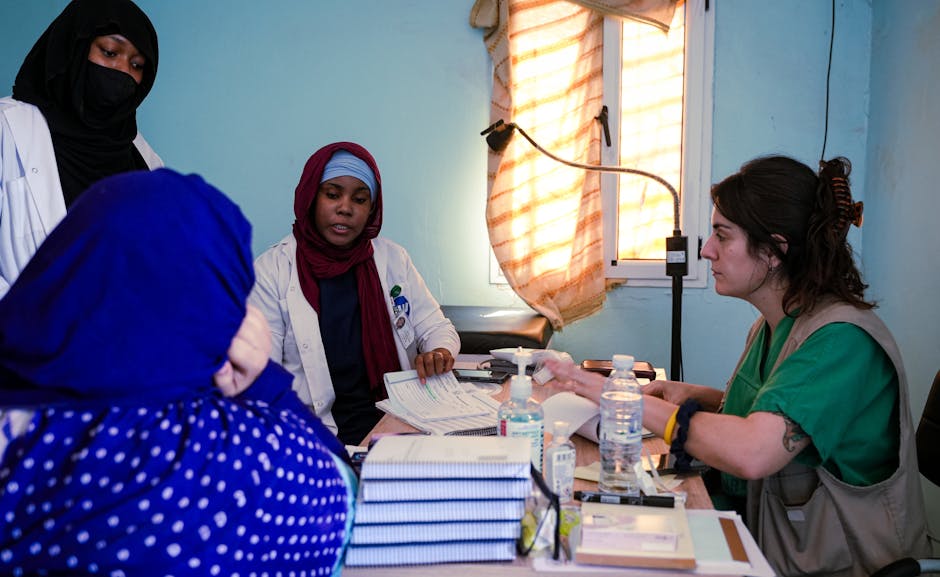
Refugees often face heightened risk of mental distress due to displacement, trauma and uncertainty. Within the EU, existing health frameworks can be expanded to include interventions that are both evidence‑based and capable of reaching large numbers of people quickly. Effective integration requires coordination between immigration authorities, public health agencies, and NGOs, alongside funding that supports training, digital tools and culturally appropriate delivery. By aligning policy, funding and service design, scalable mental‑health solutions can become a routine part of refugee reception and settlement programmes.
Why mental‑health support is a public‑health priority for refugees
Forced migration exposes individuals to multiple stressors: loss of home, separation from family, exposure to violence and the challenges of navigating new bureaucracies. Studies consistently show higher prevalence of post‑traumatic stress disorder (PTSD), depression and anxiety among newly arrived asylum‑seekers compared with host‑population averages. Left untreated, these conditions hamper learning, employment and integration, increasing the long‑term cost to health‑ and social‑care systems.
What makes an intervention “scalable”?
A scalable intervention can be delivered to many users without a proportional rise in cost or specialist personnel. Key features include:
- Standardised protocols that can be taught to non‑specialist staff.
- Digital or low‑resource formats such as mobile apps, SMS‑based counselling or group‑based psycho‑education.
- Evidence of effectiveness across diverse cultural settings.
- Adaptability to language, literacy level and local health‑system structures.
Current EU policy landscape
The EU’s Common European Asylum System (CEAS) sets minimum standards for reception conditions, but mental‑health provisions vary widely between Member States. The European Commission’s 2021 “Action Plan on Integration” recognises mental health as a pillar of integration, urging Member States to incorporate psychosocial support into initial reception. At the same time, the EU Health Programme (2021‑2027) provides funding streams that can be earmarked for mental‑health innovation, including digital health solutions.
Steps to integrate scalable interventions
1. Mapping existing services and gaps
Local health authorities should conduct a rapid assessment of current mental‑health provision in reception centres, identifying:
- Number of qualified psychologists or psychiatrists.
- Existing community‑based support groups.
- Availability of translation services.
This baseline informs where low‑intensity, scalable tools can complement specialist care.
2. Selecting evidence‑based tools
Interventions that have undergone robust evaluation in refugee contexts include:
- Problem Management Plus (PM+) – a five‑session, guided self‑help programme developed by WHO, usable by trained lay counsellors.
- Stepwise Psychological Intervention (STEP) – a brief, group‑based model focusing on stress management and emotional regulation.
- Digital platforms such as the “Mindspring” app, which provides psycho‑education and mood‑tracking in multiple languages.
Choosing tools that align with local language needs and digital access levels is essential.
3. Training and supervision structures
Scalability relies on non‑specialist staff – social workers, community mediators or volunteers – delivering interventions with fidelity. Training programmes should cover:
- Core therapeutic principles (e.g., cognitive‑behavioural techniques).
- Cultural competence and trauma‑informed practice.
- Use of digital platforms and data protection under GDPR.
Ongoing remote supervision by qualified mental‑health professionals helps maintain quality and provides a referral pathway for complex cases.
4. Embedding interventions into reception pathways
Screening for mental‑health needs should occur alongside medical examinations at the point of arrival. Positive screens trigger enrolment in a low‑intensity programme, with clear referral criteria for higher‑level care. Coordination mechanisms – for example, joint case‑review meetings between asylum officials and health services – ensure that no individual falls through the cracks.
5. Funding and sustainability
Funding can be sourced from several EU channels:
- European Asylum, Migration and Integration Fund (AMIF) – earmarked for “psychosocial assistance”.
- National health‑care budgets, especially where refugee health is covered under universal schemes.
- Public‑private partnerships supporting digital health tools.
Budget lines should cover initial rollout, training, licences for digital platforms and monitoring.
Common misconceptions
Some policymakers assume that mental‑health services for refugees must be delivered exclusively by psychiatrists. In reality, stepped‑care models demonstrate that low‑intensity interventions reduce the demand for specialist care while still delivering measurable improvement in symptoms. Another myth is that digital tools are unsuitable for displaced populations; however, mobile‑phone penetration is high across refugee camps, and apps designed for low‑literacy settings have shown good uptake.
Real‑world example: The German “Welcome Project”
In 2022, the federal state of Baden‑Württemberg launched a pilot that combined WHO’s PM+ with a multilingual mobile app. Lay counsellors, recruited from refugee communities, received a two‑week training and delivered weekly group sessions in reception centres. Over twelve months, 1 200 participants reported a 30 % reduction in depressive symptoms, while referrals to psychiatric services fell by 15 %. The pilot was subsequently funded through AMIF for expansion to three additional states.
Potential challenges and how to address them
- Language barriers – invest in professional interpreters and multilingual materials; involve community members as cultural mediators.
- Data protection compliance – ensure any digital solution stores data within the EU and respects GDPR consent requirements.
- Stigma – integrate mental‑health discussions into broader well‑being programmes, such as language classes or recreation activities.
- Continuity of care – create hand‑over protocols when refugees move from reception centres to longer‑term housing.
Policy implications for the EU
Integrating scalable mental‑health interventions aligns with EU objectives on social inclusion and public‑health resilience. It also supports the European Pillar of Social Rights, which calls for access to health services without discrimination. By formally recognising low‑intensity, community‑based mental‑health programmes in the CEAS framework, the Commission could promote a more uniform standard across Member States.
Frequently asked questions
What is the difference between “low‑intensity” and “high‑intensity” mental‑health care?
Low‑intensity care involves brief, structured interventions delivered by trained non‑specialists, often using self‑help materials. High‑intensity care requires specialised clinicians and more intensive treatment, such as psychotherapy or medication.
Can digital mental‑health tools be used without internet access?
Many solutions operate offline after an initial download and sync data when connectivity is available. SMS‑based programmes can also function on basic mobile phones.
How does integration respect the principle of voluntary participation?
Screening should be offered, not mandated. Individuals may choose to enrol in an intervention or decline, with clear information about alternative support routes.
Are there EU funding programmes specifically for digital mental‑health innovations?
The Horizon Europe research programme and the European Innovation Council have calls that cover digital health, including mental‑health applications for vulnerable groups.
What monitoring indicators are recommended?
Commonly used metrics include symptom reduction scores (e.g., PHQ‑9 for depression), uptake rates, referral numbers to specialist care, and participant satisfaction surveys.
Does integrating mental‑health services increase the overall cost of refugee reception?
While initial investment is required, evidence from pilot projects shows that early psychosocial support reduces later health‑care utilisation and improves integration outcomes, yielding net savings over time.
Embedding scalable mental‑health interventions within EU refugee services is both feasible and beneficial. By leveraging existing policy frameworks, investing in training and digital tools, and maintaining a strong focus on cultural relevance, Member States can ensure that the most vulnerable newcomers receive timely, effective support.